I am working on an archive of approximately 500 letters, nearly all in German, mostly from my grandmother to my mother, from 1919 to 1946. The work involves transcription from handwritten to typed and associated research to explain and give a background to the material in the letters.
My approach is both desk-based and anthropological. Why anthropological? Because I am visiting the places mentioned in the letters to meet people and get a feel for the environment. 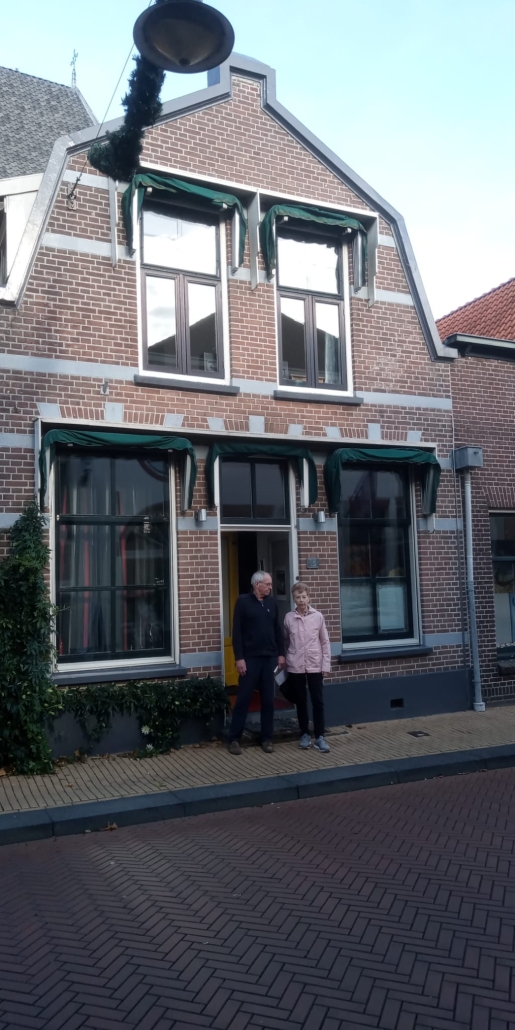
There’s nothing like being there to understand what it was like for the people who were there in the past.
So far, I have been to Steenwijk in the Netherlands, to which my mother was evacuated for recuperation after WWI (photo of me with the current owner outside the house where my mother stayed from 1919 to 1923), Vienna and the streets in which the family had lived, and Richmond in southwest London, where my grandmother, my aunt and my little cousin lived during WWII. Next stop Blackheath, Surrey, to which my cousin was sent for ‘a better education’ and for safety in 1942. He lived with Miss Edith Norah Gaskell, a distant relative of the novelist known as Mrs Gaskell, author of ‘Mary Barton’, ‘Cranford’ and a biography of Charlotte Bronte.
The letters from WWII are a source of deep family history as well as the story of refugees in London. We read about air raid shelters, bomb damage, rationing and self-sufficiency. We also read vitriolic, anguished remarks about the Nazis – bandits, criminals, demons – and the prospect of bringing them to justice. And we read about family separation, the possibility of emigration and dashed hopes for reunions.
I find this all hugely exciting, moving and educational.
OK, I am obsessed, let’s face it. But someone has to be – else where is the point of my having inherited this treasure trove?
I have a little financial backing from two funds in Vienna. A Viennese publisher is standing by to publish when the undoubtedly large manuscript is ready.